Chores for kids by age: what children aged 3 to 10 can really do
Children can start doing real chores from about age 3. A 3 or 4 year old can put toys in a box; by 5 or 6 they can set the table and make their bed; at 7 or 8 they can empty the dishwasher and pack their school bag; and by 9 or 10 many can make a simple meal with you nearby. Here are chores for kids by age, how to teach them, and how to make a chart they will use.
Chores for kids by age: a list for 3 to 10
These are age appropriate chores most children can learn with a little teaching. If your child is new to helping, start with the row below their age and move up when the jobs feel easy.
| Age | Looking after themselves | Around the home | Kitchen and meals |
|---|---|---|---|
| 3 to 4 | Dirty clothes in the basket, shoes by the door, coat on a low hook | Toys in a box, books on a low shelf, wipe a small spill, match socks | Carry their cup to the counter, put napkins out, wash vegetables in a bowl |
| 5 to 6 | Get dressed, pull the duvet up, put clean clothes in drawers, pack their bag from a checklist | Tidy their room from a checklist, water plants, sort washing into lights and darks | Set and clear the table, pour milk from a small jug, butter toast, put cutlery away (no sharp knives) |
| 7 to 8 | Lay out clothes the night before, pack school bag and PE kit, fill their water bottle | Vacuum one room, fold towels, put their own washing away, feed a pet, take the recycling out | Empty the dishwasher (you do the sharp knives), make a simple sandwich, peel carrots, wipe the table |
| 9 to 10 | Run their morning routine, pack their own lunch, strip their bed | Load the dishwasher, hang out washing, clean the bathroom sink, take the bins out | Make breakfast for the family, cook pasta or eggs with you nearby, write the shopping list |
Anything with heat, sharp knives or cleaning products stays supervised at every age on this list.
What each age can really manage
Ages 3 to 4: the helping age
Children this age usually want to help, so start now. You are building the habit, and the result matters less. Keep each chore to one step, do it next to them, and make it concrete: "Put the red blocks in the box" works better than "Tidy up". Half the blocks in the box still counts.
Ages 5 to 6: short routines
Most 5 and 6 year olds can follow two or three steps and remember a routine that looks the same every day. Nora, 5, sets the table: a fork, a spoon and a cup at each place, carried one at a time. It is slow, and that is fine. Expect a bumpy duvet and socks in the wrong drawer.
Ages 7 to 8: owning a job
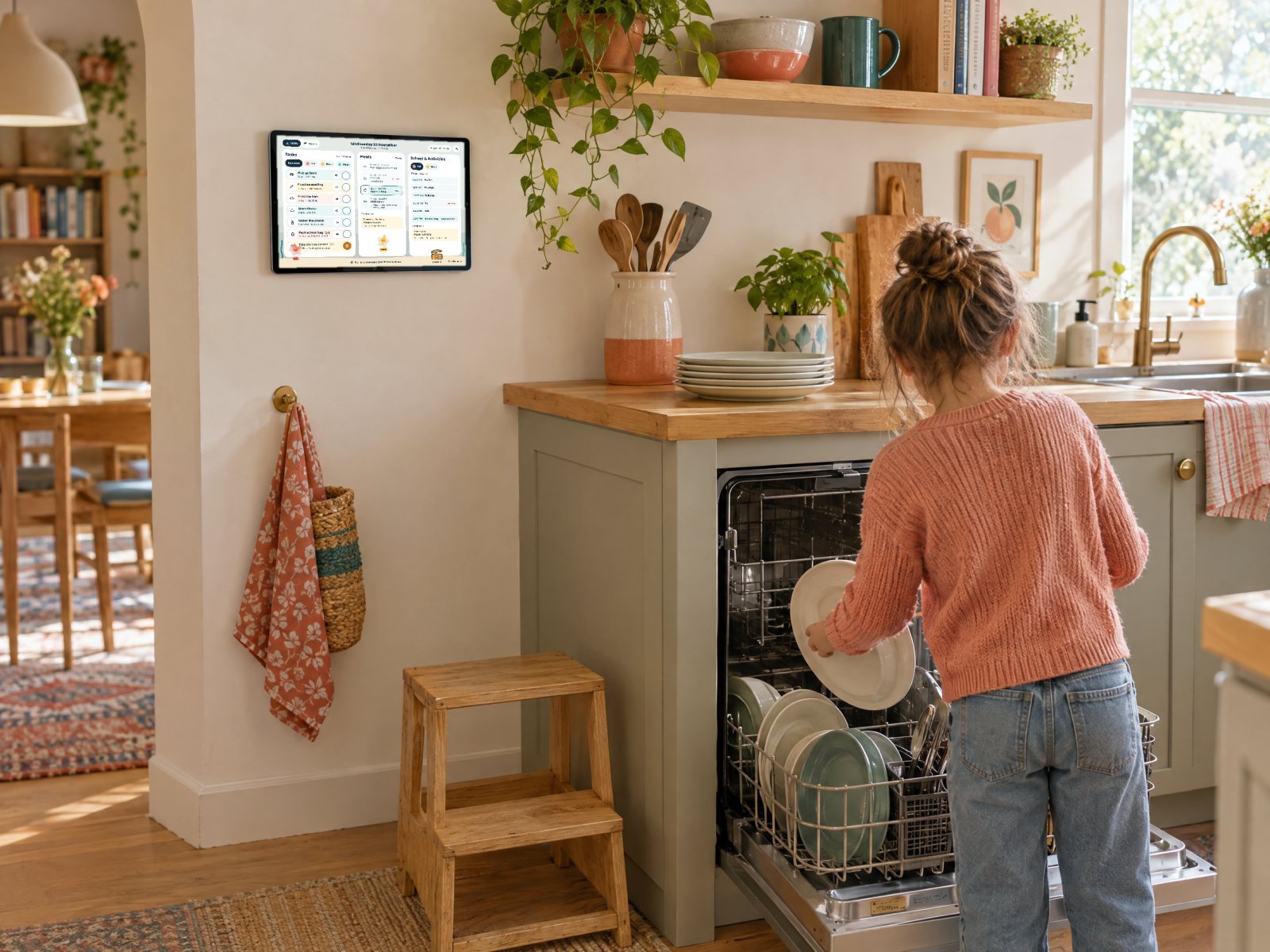
This is a good age to hand over a whole job. Kai, 7, empties the dishwasher every morning and leaves the sharp knives for a parent. One reminder on most days is normal at 7. They often rush, so show them once what finished looks like, then check the result, not the process.
Ages 9 to 10: real skills
Now they can manage jobs with several steps and do a few without being asked. Teach the skills they will need later: putting a wash on, cooking something simple. Expect some negotiation. Let them choose when a job gets done, as long as it is done by a set time, such as before dinner.
Pick jobs by skill, not birthday. A careful 6 year old may be ready for the next row, and a 9 year old who has never helped will need to start lower.
How to teach a new chore
Most chores fail at the teaching stage, because "Clean your room" means little until someone shows what it involves. This order works for almost any job:
- Do it in front of them. Say each step out loud: "Pillow at the top, duvet pulled up, teddy on the pillow."
- Do it together. They do the easy steps and you do the rest. Hand over one more step each day.
- Watch them do it. Help only when they ask.
- Hand it over. Check the result afterwards, not during.
A few habits make it stick:
- One new chore at a time. Add the next only when the last one happens without a fight most days.
- Tie it to something that already happens: after breakfast, before screens, straight after school.
- Make it possible. A low hook, a step stool by the sink, a basket they can reach. Many "won't do it" problems are really "can't reach it".
- Praise the effort specifically, and don't redo it in front of them. "You put every fork in the right place" teaches more than "Good job".
Allow a week or two of doing it together before expecting it to happen alone.
How many chores is enough?
Fewer than most charts suggest. Three jobs done most days teach more than ten jobs on a chart nobody looks at. Mix jobs that look after themselves, such as packing a bag, with at least one that helps everyone, such as feeding the cat, so they learn that home runs because people pitch in. As a rough guide for a school day:
- Ages 3 to 4: one or two tiny family jobs, plus self-care with help.
- Ages 5 to 6: two or three short jobs, about 10 minutes in all.
- Ages 7 to 8: three or four jobs, plus one bigger job at the weekend.
- Ages 9 to 10: four or five jobs, plus a weekly job they own, such as the bins.
If every day ends in an argument, or the jobs are rushed every time, the list is too long. If you are still doing everything yourself, it is too short.
Keeping chores fair between siblings
"Why does he get the easy job?" is a reasonable question, and it deserves a clear answer. Fair does not mean the same list. It means everyone helps about as much as they can for their age.
- Match time, not number of jobs. Ten minutes from a 5 year old and fifteen from a 7 year old feels fair to both.
- Rotate the jobs nobody wants, such as clearing the table, every week.
- Give older children jobs that show trust, like using the vacuum alone.
- Don't make the older one the boss. Checking a younger sibling's jobs is your job, not theirs.
- Give credit for shared jobs. When "everyone" tidies the playroom, notice who actually did it.
In Kai and Nora's house, Kai empties the dishwasher, feeds the cat and packs his own bag. Nora matches socks, puts the shoes away and waters the plants. One sets the table and the other clears it, and they swap every Monday.
Making a chore chart for kids that they actually use
A chore chart works when a child can read it in a few seconds, without help, at the moment the job needs doing. Most charts fail because they sit on a fridge door covered in a week of tiny boxes.
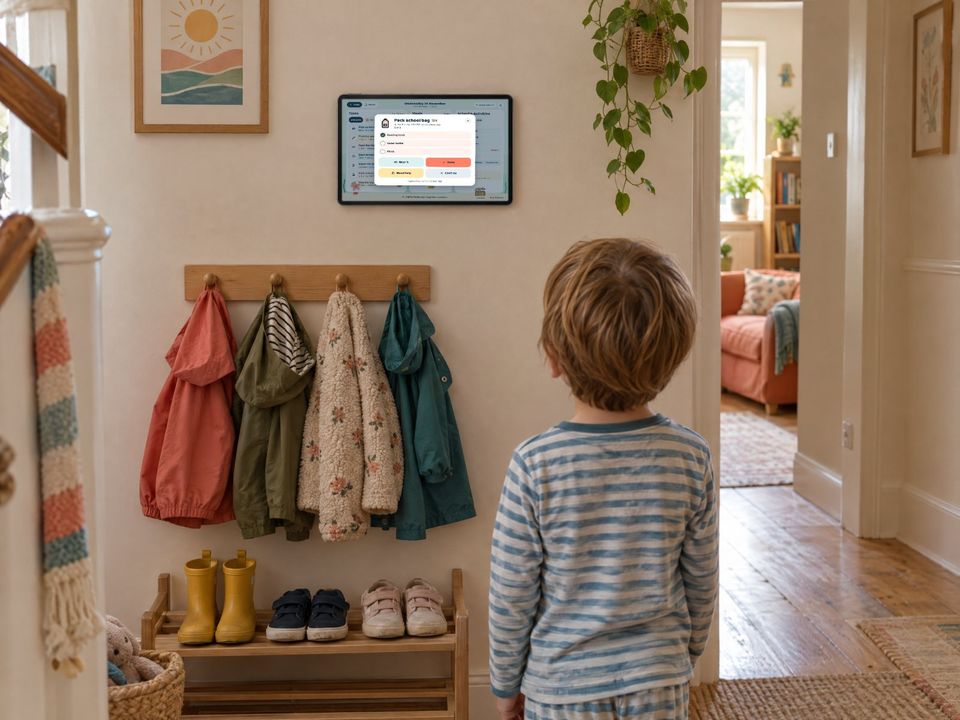
- Put it where the jobs happen, at your child's eye level. The kitchen or hallway beats a bedroom wall.
- Show today, not the whole week. Today's chore list, in the order they do it, is enough.
- Use a picture for every job if your child can't read yet. Our guide to visual schedules for kids who can't read yet shows how.
- Give each child their own column or colour.
- Make finishing feel good, with a tick, a magnet or a peg. Marking it done is part of the reward.
- Leave out the red crosses. A missed job can simply wait for tomorrow.
- Review it on Sunday. Drop a job that has become a habit and add the next one.
Rewards are optional. If you use them, keep them small and steady, and keep everyday self-care off the reward list. Our guide to reward charts that work covers how to do it without bribing.
Let the chart do the reminding
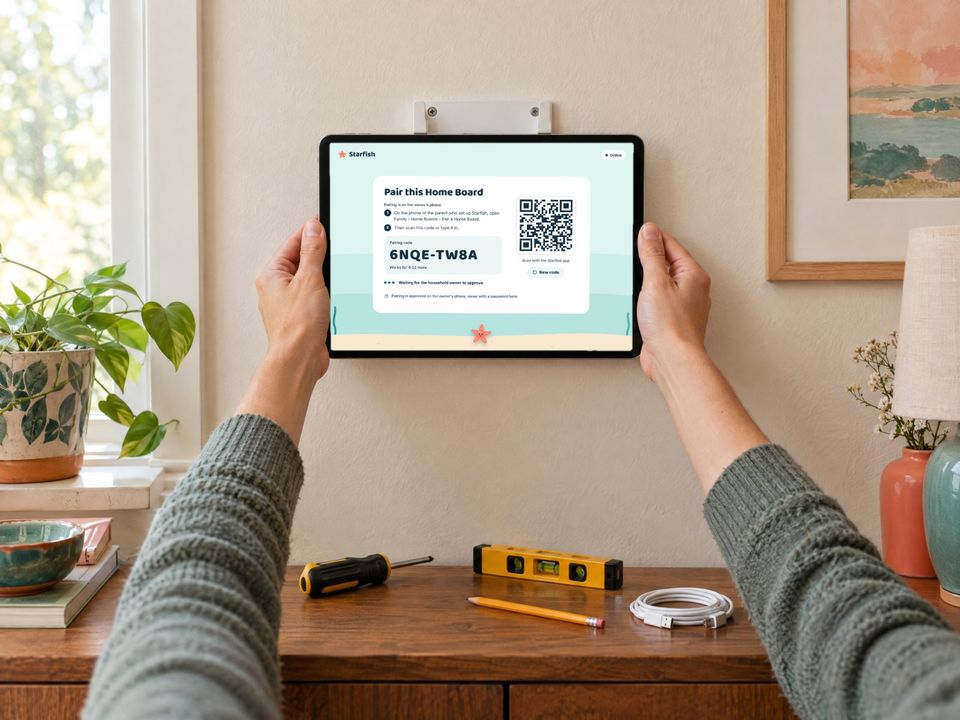
Starfish turns a tablet you already own into a wall board your children use themselves, and you plan the jobs from your phone. Each child taps their name to see their own list, with the next task on top. Every task has a picture and a Hear it button that reads it aloud, so children who can't read yet manage alone. A task can hold a checklist, such as Tidy bedroom: clothes, books, toys. Children answer Done, Need help or Can't do, and you get a notification for the last two. Jobs can repeat on school days only, and a job nobody did waits until you move it, mark it done or skip it. A task for Everyone asks who did it. Shells toward a reward you set are optional and off by default.
Questions parents ask
What chores can a 3 year old do?
Simple one-step jobs done next to you: put toys in a box, put dirty clothes in the basket, carry their cup to the counter, wipe a small spill, match socks and put napkins on the table. Expect a slow, messy version and thank them anyway. At this age the point is getting used to helping, and the skill comes with practice.
Should kids get paid for chores?
Families handle this differently. A common approach is to keep everyday family jobs unpaid, because everyone who lives in the house helps, and to pay pocket money only for extra jobs beyond the usual list, such as washing the car. Basic help stays a family habit, and children still get a chance to earn.
How many chores should a 7 year old do?
Three or four short jobs on a school day is plenty for most 7 year olds, plus one bigger job at the weekend. Mix self-care, such as packing their school bag, with at least one job that helps the family, such as emptying the dishwasher. If the list regularly takes more than about 15 minutes, trim it.
What do I do if my child refuses to do chores?
First check the job is clear and possible: shown step by step, at a fixed time, with everything in reach. Then keep it calm and brief. "Toys in the box, then we go to the park" works better than a lecture. Try not to hand out extra chores as punishment, or chores start to feel like one.
Try Starfish free and put this week's chores on a tablet your family already has.